OUR NEWSLETTER LIST IS OPEN FOR NEW SUBSCRIPTIONS!

To subscribe to our monthly news, please scroll down to the very bottom of this page. It will be on the left side. See you on the other side!

  • LV
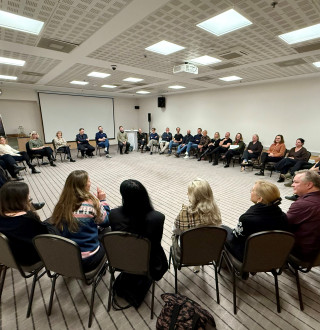
  • Friends of dialogue meet in Tallinn

    Friends of dialogue meet in Tallinn

    2026. gada 19. novembris
    Call for civil society projects

    Call for civil society projects

    2026. gada 19. novembris
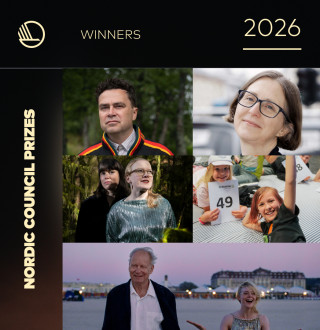
    Winners of the 2026 Nordic Council Prizes

    Winners of the 2026 Nordic Council Prizes

    2026. gada 17. novembris
    Nordic Literature Week “Democracy in the Nordic Countries”

    Nordic Literature Week “Democracy in the Nordic Countries”

    2026. gada 16. novembris
    Latvia joins Nordic-Baltic AI cooperation

    Latvia joins Nordic-Baltic AI cooperation

    2026. gada 12. novembris
  • What's new
  • News
  • Events
  • Publications
  • Gallery
  • About Us
  • Contacts
  • Funding programmes

  • Public administration
  • Programme for NGOs in Nordic & Baltic countries
  • Programme for NGOs in the Baltic Sea Region
  • Media support
  • Nordic Culture and Art Programme
  • Cooperation between organizations of people with disabilities in the Nordic region
  • Nordic Organisations’ and Institutions’ Mobility Programme (NOIM)
  • Projects

  • Sustainable development
  • Social welfare and equality
  • Democracy and good governance
  • Culture
  • Independent media
    • facebook
    • X
    • instagram
    Privacy policy Data protection policy

    Projects • Social welfare and equality The seminar on deafblindness

    2020. gada 21. oktobris
    facebook
    twitter
    linkedin

    The seminar on deafblindness was organized with the aim of raising public awareness of deafblindness to give the opportunity to professionals and other involved persons within the field of deafblindness to learn the experience from Nordic countries and to meet the demand of challenges in the field of deafblindness.

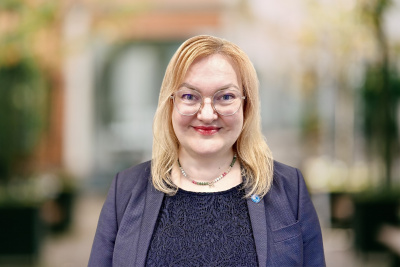
    Two Nordic experts participated in the seminar: Trine Skov Uldall from Denmark, the consultant on acquired deafblindness and Maria Creutz, a senior adviser at Nordic Welfare Center with responsibility for deafblind issues.

    Deafblindness is a combined vision and hearing impairment of such severity that it is hard for the impaired senses to compensate for each other. Thus, deafblind­ness is a distinct disability.

    To varying degrees, deafblindness limits activities and restricts full participation in society. It affects social life, communication, access to information, orientation and the ability to move around freely and safely. To help compensate for the combined vision and hearing impairment, especially the tactile sense becomes important.

    The severity of the combined vision and hearing impairment depends on a number of prerequisites:

    - the time of on-set, especially in relation to communication development and language ac­quisition,

    - the degree and nature of the vision and hearing impairments,

    - whether it is congenital or acquired,

    - whether it is combined with other impairments,

    - whether it is stable or progressive.

    The fact that it is hard for the impaired senses to compensate for each other means that attempting to use one impaired sense to compensate for the other one is time-consuming, energy-draining and most often fragmented. A decrease in the function of vision and hearing increases the need for making use of other sensory stimuli (i.e. tactile, kinaesthetic, haptic, smell and taste), it limits the access to distance information. It creates that person need to rely on information within the near surroundings and to rely on memory and to draw conclusions from fragmented information.

    Deafblindness limits activities and restricts full participation in society. In order to enable the in­dividual to use their potential capacity and resources, society is required to facilitate specialized services. The individual and their environment should be equally involved, but the responsibility for granting access to activities lies on society. An accessible society should at least include:

    - available competent communication partners,

    - available specialized deafblind interpreting, including interpreting of speech, environmental description and guiding,

    - available information for everyone,

    - human support to ease everyday life,

    - adapted physical environment,

    - accessible technology and technological aids.

    Specialized competence related to deafblindness, including an interdisciplinary approach, is vital for proper service provision.
    The presentation 

    Contacts
    • Katrīna Vītola
      Katrīna Vītola / LV, ENG, RU, FR katrina.vitola@norden.lv +371 22 026 186

    Sustainable development

    Culture

    Independent media

    Social welfare and equality

    Democracy and good governance

    Other projects

    View all projects
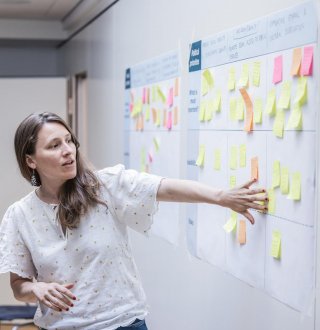
    FOR-IN 2.0 study visit to Finland

    FOR-IN 2.0 study visit to Finland

    2026. gada 28. aprīlis
    Conference “Library as a Community Centre and a Meeting Place Promoting Integration”

    Conference “Library as a Community Centre and a Meeting Place Promoting Integration”

    2025. gada 16. decembris
    Nordic–Baltic project “Fostering Refugee and Immigrant Integration FOR-IN 2.0”

    Nordic–Baltic project “Fostering Refugee and Immigrant Integration FOR-IN 2.0”

    2025. gada 2. septembris
    Nordic-Baltic cooperation in the social and health care field 2025–2027

    Nordic-Baltic cooperation in the social and health care field 2025–2027

    2025. gada 29. jūlijs
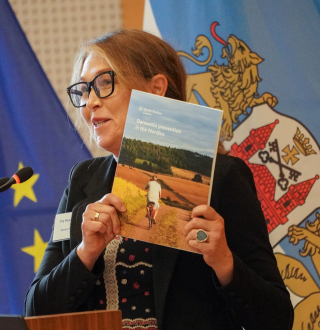
    Recap of the conference on dementia and inclusive urban environments

    Recap of the conference on dementia and inclusive urban environments

    2025. gada 10. janvāris

    Subscribe to our newsletter

    Thank you!
    • facebook
    • LinkedIn
    • instagram
    • youtube
    • X
    +371 67 820 089 info@norden.lv Marijas street 13 k-3 (Berga Bazārs), Riga, LV-1050
    • What's new
    • News
    • Events
    • Publications
    • Gallery
    • About Us
    • Contacts

    Funding programmes

    • Public administration
    • Programme for NGOs in Nordic & Baltic countries
    • Programme for NGOs in the Baltic Sea Region
    • Media support
    • Nordic Culture and Art Programme
    • Cooperation between organizations of people with disabilities in the Nordic region
    • Nordic Organisations’ and Institutions’ Mobility Programme (NOIM)

    Projects

    • Sustainable development
    • Social welfare and equality
    • Democracy and good governance
    • Culture
    • Independent media
    Privacy policy Data protection policy
    Developed by jaunrade.lv