
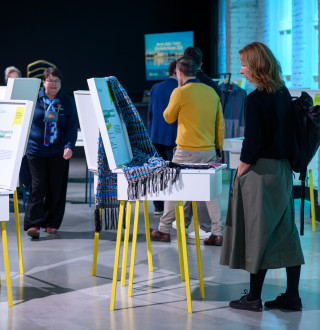
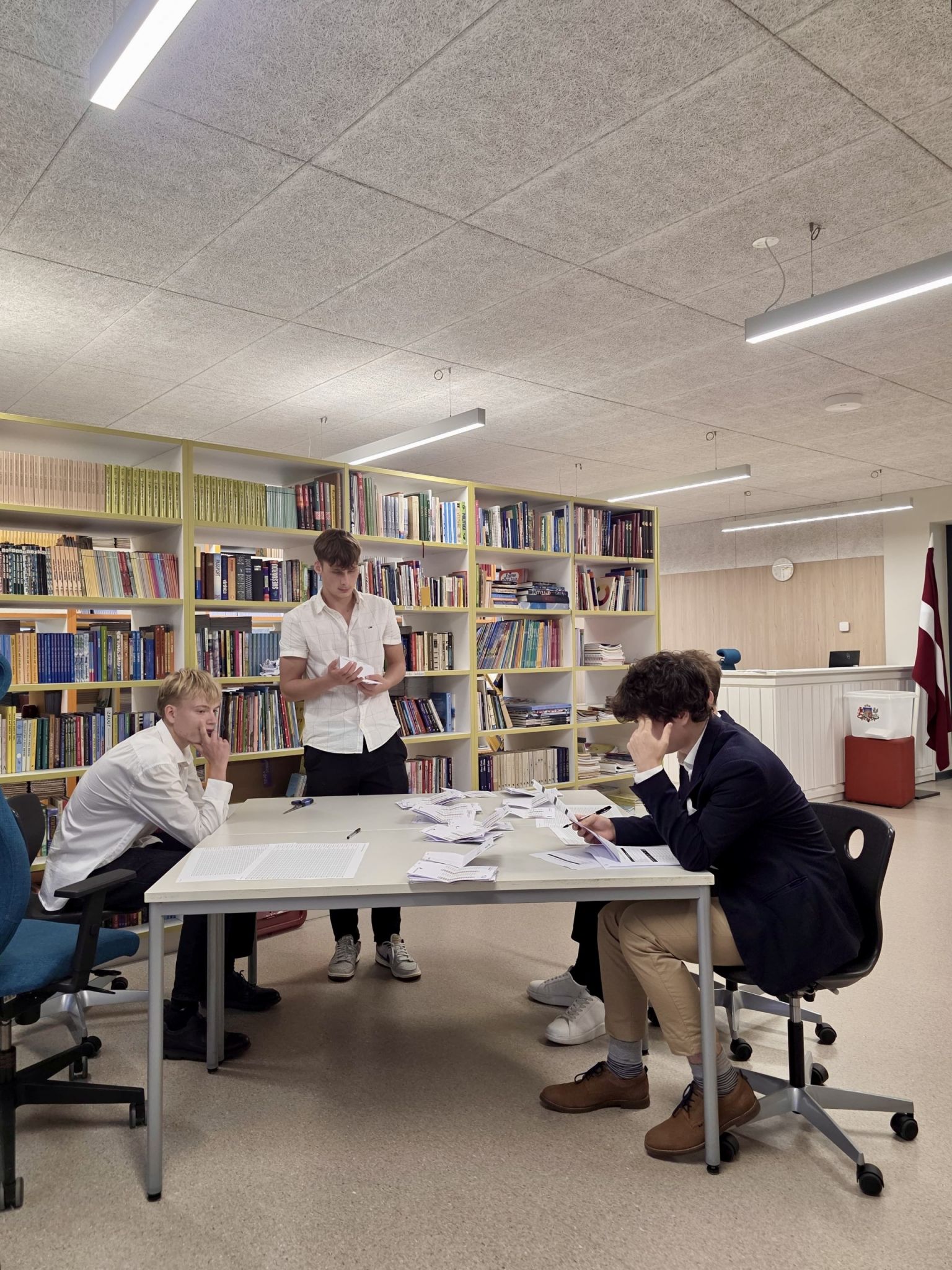
This Saturday, 3 October, the results of the Signal Elections will be announced. Before that, we are looking back at what Nordic experts shared during the Signal Elections forum from 9 to 11 August at Jēkabpils Technology School. Among the experts leading the workshops were Nordic youth representatives Anna Glaserud Samuelsen, Political Advisor at the Norwegian Children and Youth Council (LNU), and Lina Elmawardy, International Political Advisor at the Arbeidernes Ungdomsfylking (AUF). As part of the forum, they also joined an interview to share their experience of engaging young people in politics and elections in the Nordic countries, offering insights and examples that could inspire similar approaches in Latvia.
Can you share one example from your country where young people’s participation influenced a political decision? What changed because young people spoke up?
Anna Glaserud Samuelsen: One example is the right to political absence from school. In Norway, high school students have the right to be absent from school to take part in political activities or work within a political organisation. A few years ago, there was an attempt to remove this right altogether. Young people and many of our member organisations campaigned strongly against the proposal. Thanks to that, we were able to keep the right to political absence. It’s a good example of how young people can influence decisions that directly affect their ability to participate in democracy.
Lina Elmawardy: A very good example from Norway goes back about 20 years. At the time, many Norwegian students were frustrated that school books were so expensive. Students had to pay for the books they needed simply to attend high school and learn. Young people campaigned for years to change this. After a long struggle, the policy was changed, and today, all high school students in Norway receive their school books for free.
If a 16- or 17-year-old says, “My opinion will not change anything anyway,” what would you tell them based on the Nordic experience?
Anna: I would tell them that this is simply not true and, more importantly, it should never be the case. Young people’s opinions matter. Children and young people also have a legal right to be heard under the UN Convention on the Rights of the Child. So if you feel that you are not being heard, don’t assume that your voice doesn’t matter. Demand your space. You have the right to take up that space and to have your views taken seriously.
Lina: Based on the Nordic experience, I don’t think that feeling reflects how democracy is supposed to work, especially in Norway. The only way to shape the future is to be part of it and to be part of creating change. So I would encourage young people to reach out. Go out, meet other young people, connect with youth organisations and ask: How can I become part of this movement? How can I help change the things I’m dissatisfied with? You don’t have to change everything on your own. Sometimes change starts simply by finding other people who care about the same things you do.
What is one thing the Nordic countries have learned about getting young people interested in politics that could also work in Latvia?
Anna: Politics has to be interesting, but young people also need to understand why it matters to them. One of the most effective ways to teach young people about politics is to start with the issues they actually care about – not simply the topics adults think are important. For example, instead of telling young people what they should learn about, give them the opportunity to choose the issues they want to explore. When young people can connect politics to their own lives and interests, they become much more engaged in the learning process. I think that is something that could work very well in Latvia too.
Lina: I would say, make politics fun and make it relevant. Social media has played a very important role in Norwegian politics in recent years, particularly when it comes to engaging young people. What we have learned is that when young people are given a platform, especially in newspapers, television, online media and social media, they become more interested in politics and in learning more about the issues that affect them. We have seen a real change in recent years. Young leaders from youth political organisations are getting more opportunities to speak publicly and share their views. And we are also seeing a growing interest in politics among young people. I think Latvia could learn from this experience by creating more space for young people in the media. If you want young people to take an interest in politics, you also have to give them a chance to be seen and taken seriously.
From your experience, what makes a youth election initiative successful in practice? Is it the voting itself, the debates beforehand, learning about political parties or something else? Why?
Anna: I think it’s important to understand the whole system. Young people should learn about the political parties and the people behind them, but also about the role of journalists and how political communication works. Understanding a little bit of everything that shapes political life is valuable. But just as important is making it understandable. Politics can seem complicated or even intimidating, so we need to break it down and explain it in a way that makes sense to young people. Politics is not scary and it shouldn’t be. The more accessible we make it, the easier it becomes for young people to engage with it and form their own opinions.
Lina: I think it’s definitely about finding the right balance and combining different elements. One of the most important things is that schools themselves are committed to teaching students about democracy and elections. There needs to be an initiative from the schools, but there also needs to be enough structure and support for youth organisations to come into schools and engage directly with young voters. And the debates themselves should be engaging. Let young politicians make jokes, be themselves and talk about issues in a way that feels relevant to young people. A successful initiative should make young people feel that politics is something they can participate in, not just something they have to sit and listen to.
What can young people learn by taking part in a mock election that they cannot learn simply by reading about politics?
Anna: I think one of the most important things young people can learn from a mock election is just how simple voting actually is. You put a ballot in a box and make a choice. It’s not scary and it’s not dangerous. At the same time, a mock election also shows you how much work goes into making that choice. You need to do your research, understand the different parties and their positions, and decide what you actually believe in. So there are two lessons: voting itself is simple, but making an informed choice takes effort.
Lina: I think young people learn that becoming an informed voter requires research. And it’s much easier to become an active participant in democracy when you have already had the chance to learn about it at school without the pressure and high stakes of a real election. For me, it was interesting to see that political parties could say one thing and then sometimes vote differently in Parliament. Learning to look at those differences and question what politicians actually do, rather than simply what they say, was very valuable.
If you could give Latvian students one challenge before they take part in Signālvēlēšanas, what would you ask them to do?
Anna: I would challenge you to find one issue that you genuinely care about and find out what different political parties think about it. It can be something big or something very small, whatever matters to you. The important thing is to choose an issue you actually care about, look at what different parties have to say and be open to hearing different perspectives.
Lina: I would ask you to come up with one question and ask the same question to each youth political organisation. That way, you can compare their answers and get a clearer picture of where they stand. But the biggest challenge is even simpler: take the ballot paper and vote. That is the most important thing you can do. You don’t need to know everything about politics. Start by being curious, ask questions, listen to different perspectives and then make your own choice.
Finish the sentence: Young people should vote because…
Anna: …your voice matters. You have a right to be heard and a right to participate, but participation is also a responsibility. That is how society works. Everyone has a part to play. And voting is one of the simplest ways to do yours.
Lina: …it is our future and we deserve to have a say in it.