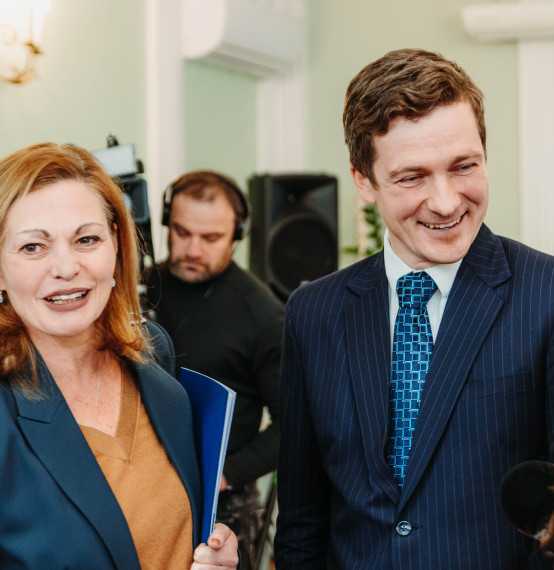
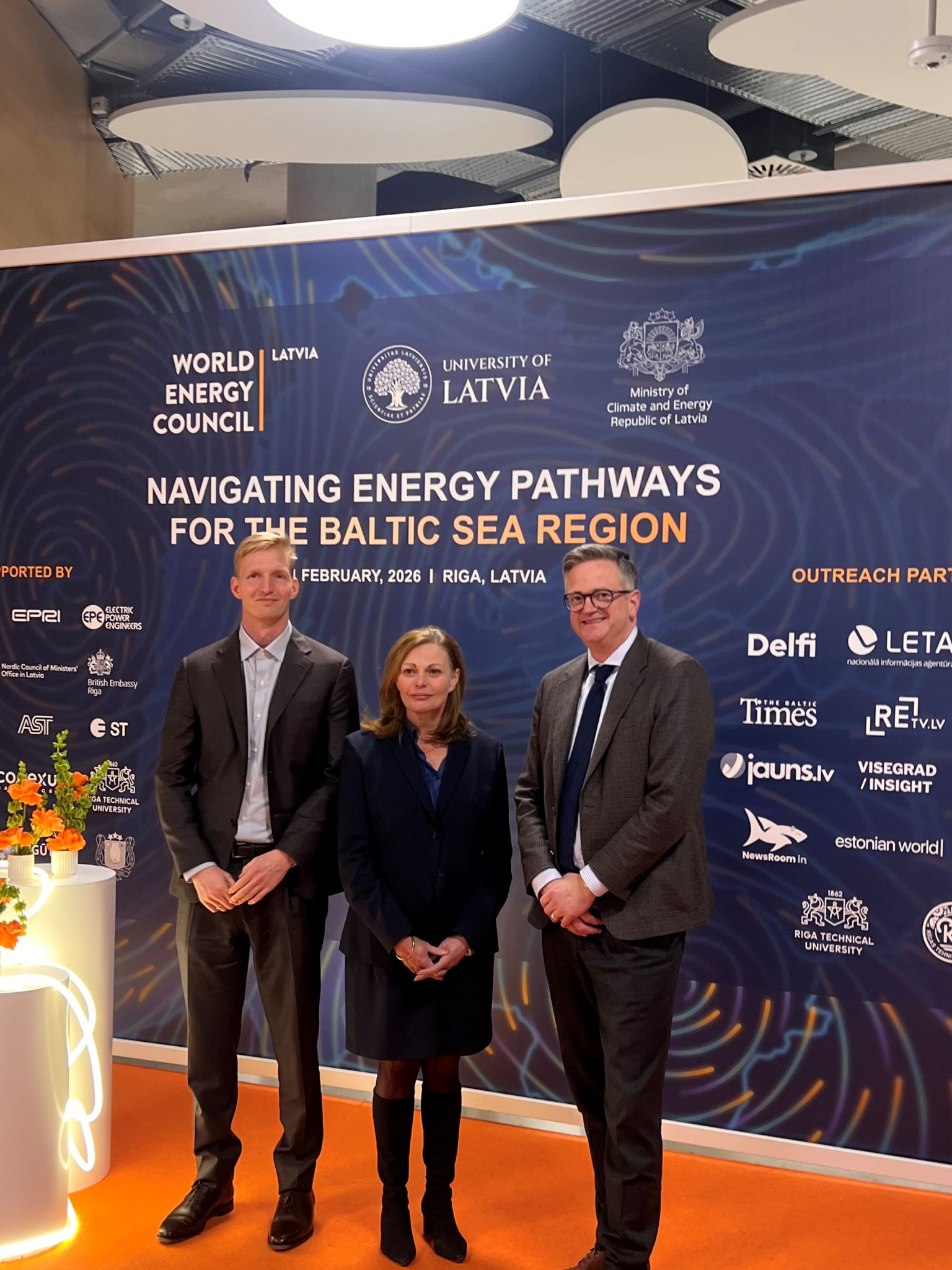
On 11 February 2026, the conference “Navigating Energy Pathways for the Baltic Sea Region”, organised by the World Energy Council Latvia in cooperation with the Ministry of Climate and Energy and the University of Latvia, brought together up to 300 on-site participants and a global online audience.
As a flagship event on the road to the World Energy Congress 2026 in Riyadh, it gathered ministers, regulators, investors and industry leaders to align strategy at a time when energy security, affordability and sustainability are inseparable. Conferences of this scale matter because they shape regional cooperation, accelerate investment decisions and strengthen shared responses to geopolitical and market volatility.
High-level participation underscored the importance of the gathering. Among the speakers were Baltic energy ministers including Kaspars Melnis from Latvia, Andres Sutt from Estonia and Žygimantas Vaičiūnas from Lithuania. Senior experts such as Stefan Kapferer, Hala N. Ballouz, Burkhard v. Kienitz, Jörg-Andreas Krüger and Mogens Hagelskær contributed global and European perspectives.
The conference was led locally by Olga Bogdanova, President of the Latvian National Committee of the World Energy Council. Discussions spanned from geopolitics and global energy pathways, balancing supply and demand and financing the transition to community-driven action – topics that require international coordination to ensure resilient, competitive and socially accepted energy systems.
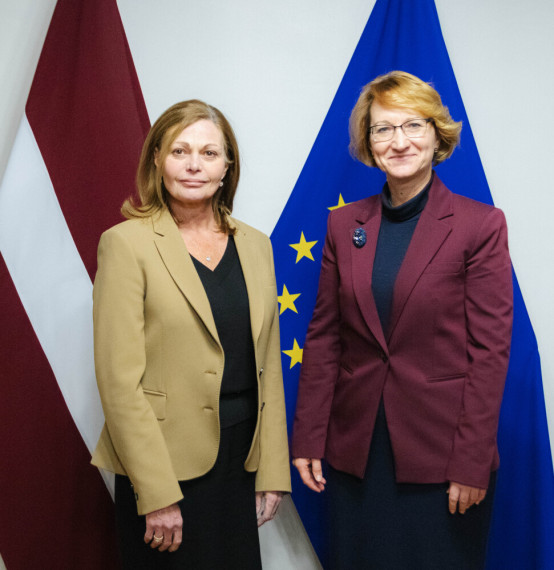
Representing the Nordic Council of Ministers’ Office in Latvia, Director Nina Hvid Enevoldsen addressed the panel on Community Engagement and Actionable Steps to Achieve Energy Affordability and Reliability with a keynote speech. Highlighting a Nordic-Baltic perspective and marking 35 years of cooperation, she explained the strategic necessity of clean energy and energy independence and the role of local communities in all of that.
“Getting local communities on board is not a one-off communications task, it’s a business model choice. The Nordics show that when developers share benefits, power and information, when they listen and adapt – cooperation becomes possible. And that cooperation becomes even more valuable in a world where stable, home‑grown energy matters more than ever.”
–Nina Hvid Enevoldsen
Drawing on Nordic practice, the Director explained that opposition is often labelled as NIMBY (“Not in my backyard”), yet in reality it is more frequently a reaction to the fact that residents’ views are not heard at the very early stages of projects. This is further intensified by uncertainty about how projects will develop and by an unfair distribution of benefits and costs. She described the Nordic approach through four key principles:
- early and transparent engagement,
- tangible local economic benefits,
- shared ownership models and
- genuine co-design.
With energy security set as one of our organisational priorities for the coming three-year period, she listed Nordic examples that prove the value of community involvement. She mentioned Denmark’s Middelgrunden offshore wind cooperative in Copenhagen as a global example of citizen co-ownership building trust. She pointed to Copenhill, integrating waste-to-energy infrastructure with public urban space and to Norway’s Ånstadblåheia wind farm near Sortland, where local contractors and community funds strengthened long-term acceptance. Points in her presentation were quoted in the following panels by industry leaders such as Dr. Renāte Strazdiņa from Microsoft, who detailed about the potential and practicalities of data centres and stressed the need for “good electricity price being long-term, transparent, predictable.”
The theme of community ownership is further explored in Ms. Enevoldsen’s article in the latest Energy magazine (in Latvian) issued by the Latvian National Committee of the World Energy Council. In the article she elaborates on the claim that community engagement is not a mere communications task, but a business model choice.
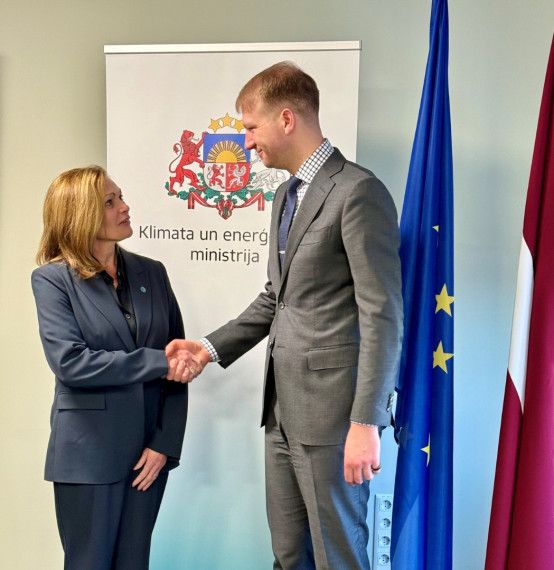
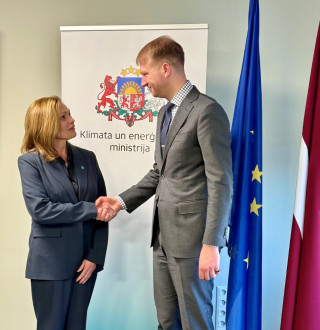
The conference also enabled bilateral meetings, including follow-ups to the Director’s 4 February meeting with Minister Kaspars Melnis. Side discussions with senior experts and field leaders are expected to accelerate Latvia’s efforts within a Nordic-Baltic framework. The likely outcome of this conference is stronger policy alignment, deeper Nordic-Baltic cooperation and practical steps toward a secure, affordable and publicly supported energy future.