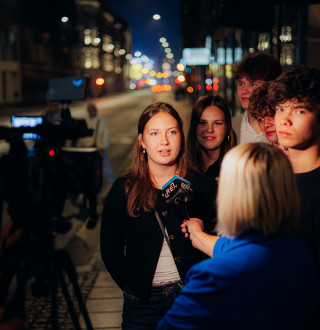
A new urban development project, the Liepāja Future Districts Challenge, has been launched in Liepāja. Around 60 students of architecture, urban planning and landscape architecture from four Latvian higher education institutions will spend several weeks developing future development concepts for four key areas of the city.
The project brings together students from the University of Latvia, Riga Technical University, RISEBA and the Latvia University of Life Sciences and Technologies. Work on four city areas is integrated into the students’ study programmes. The work spans from analysis of the areas and the conditions for their development to concrete spatial development concepts, priority projects and solutions that could also provide a basis for future urban planning.
“With this project, the Nordic Council of Ministers wants to make a lasting contribution to the future development of Liepāja, one of Latvia’s most economically active cities. We greatly value Liepāja’s openness to new ideas and its willingness to involve young professionals in shaping the city’s future. At the same time, the project provides an opportunity to combine the creative potential of Latvia’s future architects and urban planners with Nordic experience in creating sustainable, people-friendly and climate-resilient urban environments. We hope that this cooperation will generate ideas that can provide a valuable basis for the further development of these areas in Liepāja.”
– Nina Hvid Enevoldsen, Director of the Nordic Council of Ministers’ Office in Latvia
Four areas – four challenges for the future of Liepāja
Four very different areas of the city have become the students’ laboratories for ideas. What they have in common is significant development potential that is currently not being fully used.
“Nordic presence in Latvia marks its 35th anniversary this year. Over this time, close cooperation has developed, bringing Latvia closer to the Nordic family. I am pleased that we are marking this anniversary in Liepāja by working together on the future of the city. Young architects and planners, together with experienced professionals, are exploring ways to develop four very different areas of Liepāja. Each has its own character, history and opportunities that have not yet been fully realised. This diversity is what makes Liepāja an interesting place for young professionals, and their perspective can help us see new opportunities for development in places we already know well. I hope that, over time, we will also see the most valuable ideas implemented in the city.”
– Gunārs Ansiņš, Chair of the Liepāja City Council
In the Kursa area, near Roņu Street, students are looking for solutions for a site where the Liepāja Canal meets the Baltic Sea. One of the challenges is to explore how an active and publicly accessible urban environment could be developed alongside port activities, with a view to eventually extending the Old Harbour Promenade all the way to the Southern Breakwater.
“The vision for Kursa Quarter is to create a modern and dynamic environment where historic industrial heritage meets contemporary business, culture, art and education. The area will develop as an important part of the new Liepāja – a place where the values of the past are preserved while creating space for new business ideas, dreams and plans. It will be an open and attractive environment for young professionals, entrepreneurs, residents and visitors – a place where history inspires the future. Young professionals will be able to play an active role in the development of the quarter, using their knowledge, ideas, creativity and initiative to shape the future Kursa Quarter.”
– Uldis Lībergs, Chairman of the Board of Kursas kvartāls Ltd.
For the Northside Business Park, the challenge is to explore how a historically enclosed industrial area can gradually be transformed into a modern, multifunctional part of the city, while retaining its production and logistics functions and industrial heritage.
“The vision for Northside Business Park is to create a modern, multifunctional and sustainable urban quarter that meets the needs of residents, visitors and businesses in Liepāja and the wider region, while supporting sustainable economic development and a high quality of life. We see the Liepāja Future Districts Challenge, implemented by the Nordic Council of Ministers’ Office in Latvia, as an excellent opportunity to work with Nordic and Latvian students, professors and experts in urban development and add concrete proposals to this vision. While retaining the existing business activities, we want to encourage more diverse development of the area by giving new value to existing buildings and infrastructure, as well as developing proposals for new buildings and public spaces, better accessibility and stronger connections with neighbouring city quarters and Liepāja as a whole.”
– Inese Kurvina, Development Manager at Northside Business Park
Around Liepāja railway station, the task is to develop a vision for a new urban mobility hub and one of Liepāja’s gateways, connecting rail and bus services with housing, business, culture, public space and other urban functions. Around the Pērkone Canal, students will explore opportunities to create a high-quality green corridor and recreational space, improve access to the water, and find new uses for the Southern Fort and the historic fortifications.
From Copenhagen experience to solutions for Liepāja
An important part of the Liepāja Future Districts Challenge is bringing Nordic experience to Latvia. During the project, students will explore examples from medium-sized Nordic cities whose experience and scale are comparable to the challenges facing Liepāja. The Nordic examples include the Swedish cities of Växjö and Lund, Lahti in Finland and Kristiansand in Norway. They cover a range of approaches, from climate-resilient public spaces and integrating nature into residential areas to sustainable timber construction, the circular economy, climate-neutral urban districts and green mobility solutions. The project also involves internationally experienced urban planning expert and former City Architect of Copenhagen Tiina Saaby. She will share insights into Copenhagen’s experience of urban development and practical solutions with the students.
“I see this project as an excellent opportunity both for Liepāja and for the new generation of architects and urban planners. With its scale, diverse urban environment and areas where industrial heritage, the port, nature and the needs of a modern city come together, Liepāja provides a particularly suitable setting for developing bold ideas and new solutions. The project also gives young professionals an opportunity to draw on the experience of Nordic cities and adapt it to the Liepāja context. I hope that the project will not remain a one-off initiative, but could become an annual initiative, involving a different Latvian city each year and offering a new perspective on its future development.”
– Gvido Princis, architect and member of the Board of
the Latvian Association of Architects, Chairman of the Board of UrbanComm Ltd.
More than a theoretical exercise: real ideas for real areas of Liepāja
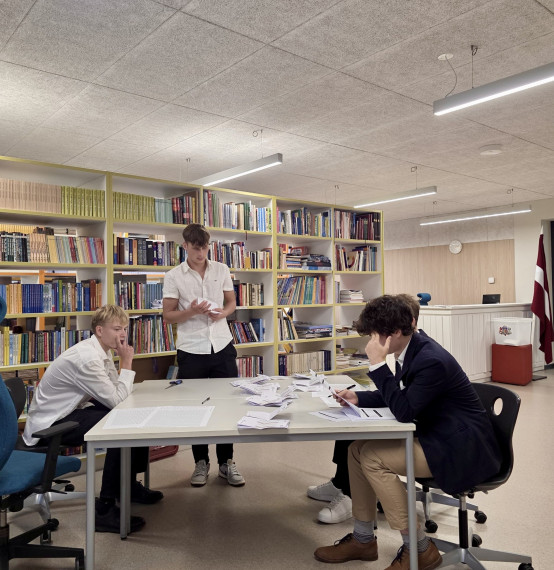
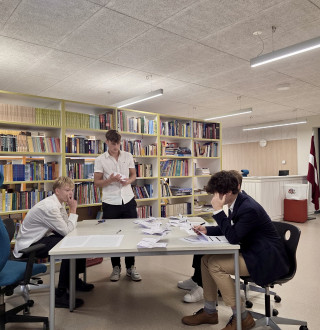
During the challenge, students work in interdisciplinary teams. They analyse the current situation and the constraints affecting each area, consider alternative development scenarios and develop spatial development concepts. These cover land use, public space, mobility, development principles and connections between areas, as well as identifying development stages and priority projects.
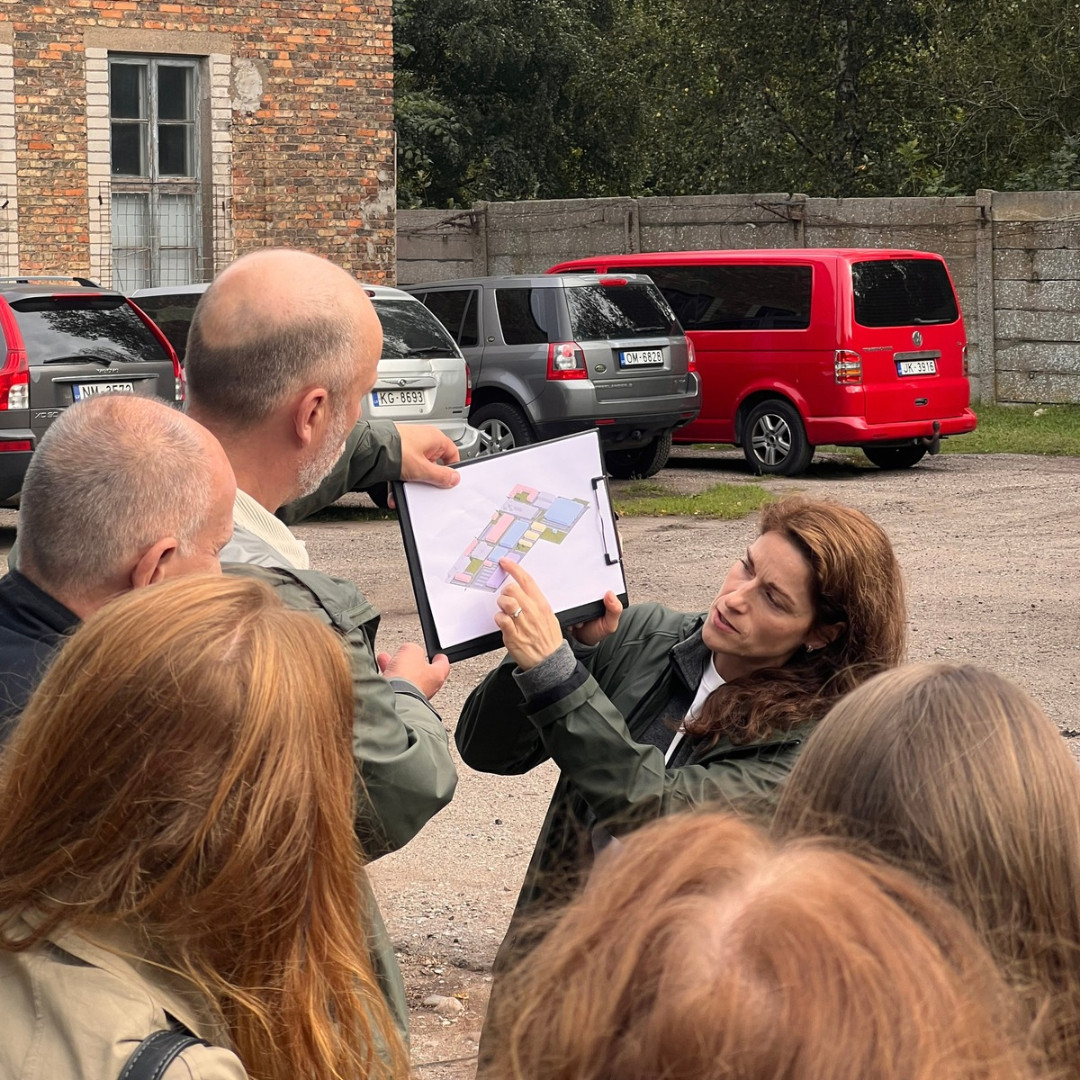
Particular emphasis is placed on the practical application of the proposals. Students are expected not only to show what a particular area could look like in the future, but also to consider what could be developed there, where, under what conditions and in what order. At the same time, the proposals are strategic development ideas rather than legally binding spatial plans or detailed building designs. The project began with an on-site study of all four areas in Liepāja. This will be followed by a series of online lectures and workshops with Nordic experts, teamwork by the students and interim presentations.
The project will conclude on 3 November in the Chamber Hall of the Great Amber Concert Hall, where the students will present their visions for the future of Liepāja to a jury, area owners, decisionmakers, city representatives and other professionals. Up to 150 participants are expected to attend the final event. Alongside the student presentations, it will include presentations on urban innovation in Nordic cities and an award ceremony for the best proposals.
The closing date coincides with the culmination of the annual Nordic Days. The aim is to establish this urban planning challenge as a tradition continuing in another Latvian city next year.
Broad representation from Latvian higher education institutions
Riga Technical University is represented in the project by students from the Architecture study programme at the Institute of Architecture and Design, including students participating in the international Erasmus mobility programme. The university’s representatives also include Associate Professor Dr Arch Edgars Bondars and Lecturer Mg Arch Egons Bērziņš.
The University of Latvia is represented by students from the professional master’s study programme in Spatial Development Planning at the Faculty of Science and Technology, as well as Associate Professor Pēteris Šķiņķis, Assistant Professors Rūdolfs Cimdiņš and Gunta Lukstiņa, and teaching staff members Ilona Šavraka, PhD student, and Jonas Buechel.
The Latvia University of Life Sciences and Technologies is represented by students and teaching staff from the professional master’s study programme in Landscape Architecture and Planning, including Professor Dr Arch Aija Ziemeļniece and Associate Professor Dr Arch Una Īle.
RISEBA is represented by students and teaching staff from the professional master’s study programme in Architecture, including Rūdolfs Dainis Šmits, Efe Duyan, PhD Helēna Gūtmane and Jonas Buechel.
The project was initiated and is funded by the Nordic Council of Ministers’ Office in Latvia. It is being developed in cooperation with the Liepāja City Municipality and businesses in Liepāja, creating a platform where the ideas of Latvia’s young professionals meet Nordic experience in developing sustainable and people-friendly cities.