

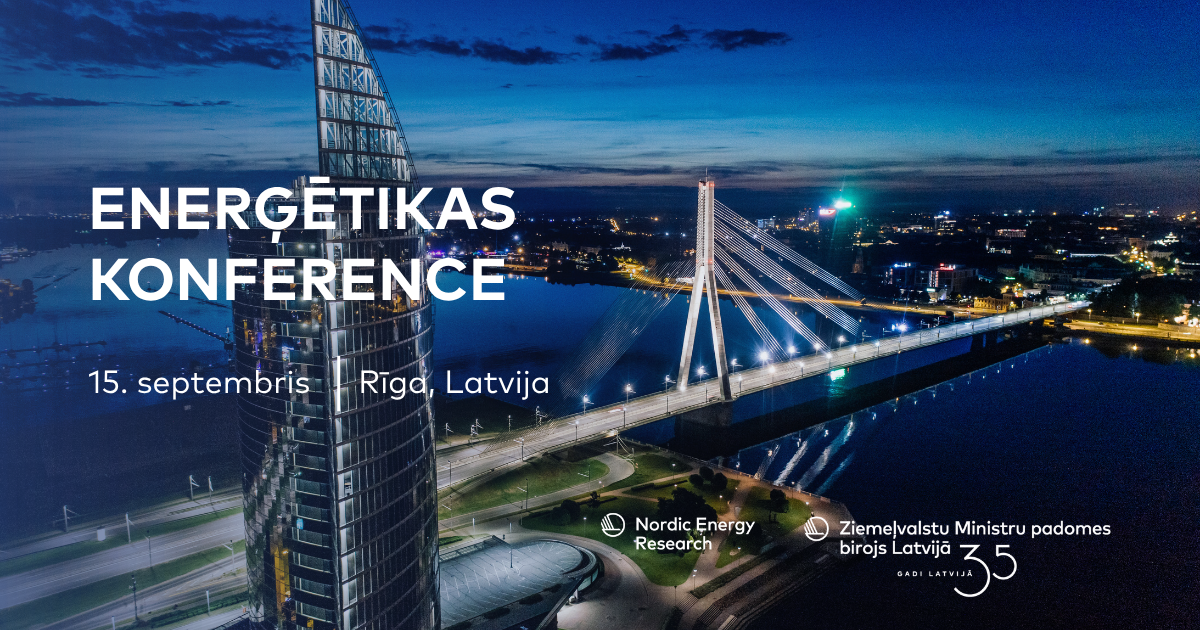
15. septembrī Rīgā notiks Ziemeļvalstu un Baltijas valstu enerģētikas konference 2026, ko rīko Ziemeļvalstu Enerģētikas pētniecības institūts sadarbībā ar Ziemeļvalstu Ministru padomes birojiem Latvijā, Igaunijā un Lietuvā.
Konferences galvenā tēma šogad būs enerģētiskā un energoapgādes drošība Ziemeļvalstu un Baltijas reģionā, kam šī brīža ģeopolitiskajā situācijā tiek pievērsta aizvien lielāka uzmanība gan katras valsts, gan reģionālās sadarbības līmenī. Šo reģionu vieno kopīgs mērķis – veidot uzticamu un ilgstspējīgu enerģētikas sistēmu. Lai to īstenotu, nepieciešams stiprināt sadarbību starp valdībām, uzņēmējiem un nevalstiskajām organizācijām.
Notikums kalpos kā platforma, kur satikties politikas veidotājiem, privātā sektora pārstāvjiem un nevalstiskajām organizācijām no Ziemeļvalstīm un Baltijas valstīm, lai dalītos pieredzē un apspriestu reģionālās sadarbības nākotni enerģētikas jomā. Konferences laikā tiks meklētas atbildes uz jautājumiem, kuri ir svarīgi turpmākā reģiona attīstībā enerģētikas jomā:
1. Kā Ziemeļvalstis un Baltijas valstis var stiprināt energoapgādes drošību?
2. Kādi sadarbības formāti ir nepieciešami, lai veicinātu noturību pret jauniem izaicinājumiem un pāreju uz dabai labvēlīgākiem enerģijas ieguves veidiem?
REĢISTRĀCIJA konferencei atvērta līdz 2026. gada 9. septembra plkst. 17.00: https://ej.uz/hat53
Norises laiks: 15. septembris
Norises vieta: "Kokaru zāle", Lūcijas Garūtas aleja 8, Mežaparks, Rīga, Latvija
Valoda: angļu
PROGRAMMA
|
09.00 |
Reģistrācija |
|
09.30–10.30 |
Baltijas un Ziemeļvalstu ceļvedis energoapgādes drošībai |
|
10.30–11.00 |
Kafijas pauze |
|
11.00–12.00 |
Noturīgas vietējās energosistēmas praksē |
|
12.00–13.00 |
Pusdienas |
|
13.30–14.30 |
Pabeigt Ziemeļvalstu savienojumu |
|
14.30–15.00 |
Kafijas pauze |
|
15.00–16.00 |
Jaunās balsis reģiona enerģētiskās noturības stiprināšanai |